Non-Healing Foot Wound
Why does a diabetic foot wound fail to heal? Assessment of hidden infection, circulation, pressure and blood sugar, and what needs to be done.
Short answer
If a diabetic foot wound does not clearly shrink within 4 weeks despite proper care, there is an unresolved cause underneath. The most common causes are continuing to walk on the wound, inadequate blood flow, hidden infection (especially bone infection) and high blood sugar. Simply changing the dressing does not work unless these causes are looked for one by one and corrected.
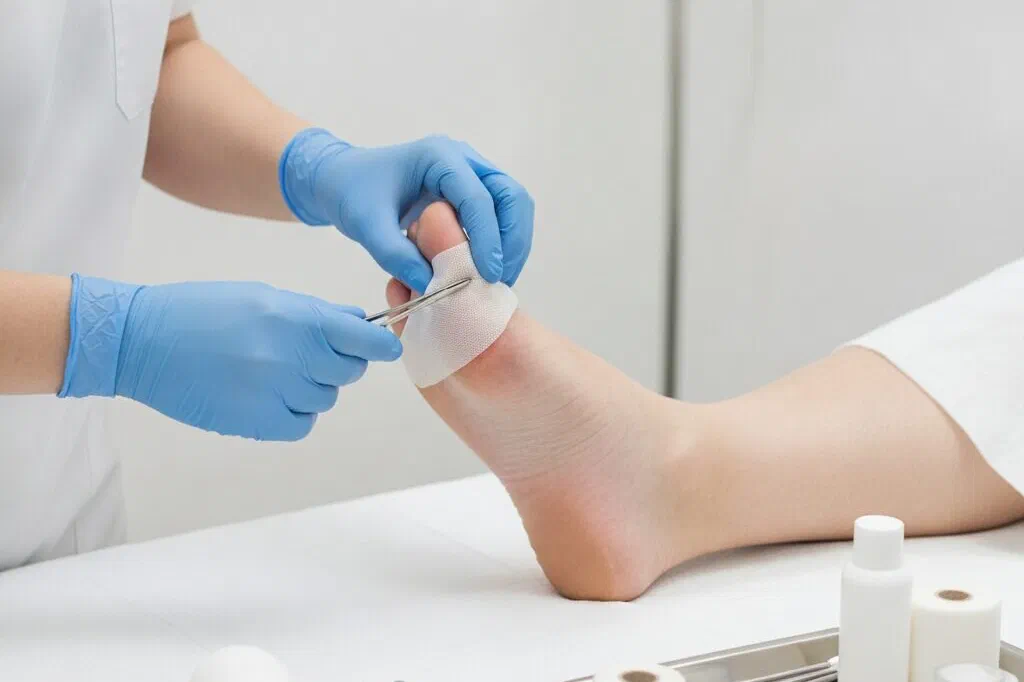
If a diabetic foot wound does not clearly shrink within a few weeks despite proper care, it is likely that a cause is being overlooked. A "non-healing wound" is usually not a single problem but a combination of several. Changing the dressing material does not remove these causes; the cause has to be found first.
Why does a wound not heal?
Pressure and load. This is the most common and most often overlooked cause. Because nerve damage means no pain is felt, the person keeps walking on the wound. Every step injures again the tissue that is trying to heal.
Inadequate blood flow. If the leg arteries are narrowed or blocked, oxygen, nutrients and medicines cannot reach the wound. If the foot is cold, if pulses cannot be felt, or if the wound is on the tips of the toes or the heel, circulation must be assessed.
Hidden infection. Under a wound that looks calm on the surface there may be a bone infection (osteomyelitis). In wounds that have not closed for months, or that close and open again, it is one of the first causes to consider.
Poorly controlled blood sugar. High blood sugar slows down the defence cells and the building of new tissue.
Dead tissue and callus. Thick callus around the wound and dead tissue in the wound bed block healing mechanically and give bacteria a place to grow.
Other factors. Poor nutrition (especially lack of protein), smoking, swelling from fluid (oedema), kidney disease and some medicines also slow the process.
What is done during the assessment?
- Measuring and photographing the wound: Size and depth are recorded, and the change over the weeks is followed.
- Looking for infection: The signs are checked, and whether the wound extends to the bone is examined; blood tests, X-ray and MRI are requested if needed.
- Circulation assessment: Pulse examination and Doppler measurements; imaging of the blood vessels if needed.
- Pressure assessment: The location of the wound, the way the person walks and the footwear used are reviewed.
- General condition: Blood sugar, nutritional status and kidney function are reviewed.
The basic steps of treatment
| Problem | What is done |
|---|---|
| Load on the wound | Offloading: a special boot, a cast or an insole; crutches or a wheelchair if needed |
| Dead tissue, callus | Regular wound cleaning (debridement) |
| Infection | Antibiotics based on culture; surgery if needed |
| Inadequate blood flow | Improving blood flow through vascular surgery or interventional radiology |
| High blood sugar | Readjusting the treatment |
| Wound environment | A dressing suited to the state of the wound; additional methods such as vacuum therapy in selected cases |
These steps are carried out at the same time. Correcting only one of them is usually not enough. For example, even the best dressing does not work if the patient keeps walking on the wound.
How is progress followed?
The wound is measured at every visit. With appropriate treatment, the wound area is expected to shrink clearly in the first 4 weeks. If it does not, the plan is reviewed: is offloading really being applied, is circulation adequate, is there an infection that has been missed? Additional treatments are considered only after these basic steps have been carried out.
What can you do?
- Do not walk on the wound. Use the boot or insole you were given indoors as well, even when getting up to go to the toilet at night.
- Do not cut the wound yourself, do not remove the scab, and do not use callus remover products.
- Change the dressing as often as recommended and in clean conditions.
- Keep your blood sugar close to the target set by your doctor.
- If you smoke, get support to stop.
- Take a photo of the wound from the same angle every week; it makes comparison easier.
Assessment in Istanbul
Infection is one of the most frequently missed causes in non-healing wounds. As a specialist in Infectious Diseases and Clinical Microbiology, Prof. Dr. Aytaç Çetinkaya assesses the infection side of the wound and, when needed, recommends working together with vascular surgery, orthopaedics, plastic surgery and endocrinology. Patients from outside Istanbul and international patients can send a photo of the wound and their existing reports on WhatsApp to ask for a preliminary review. A preliminary review does not replace an examination.
Frequently asked questions
How long should a wound take to heal?
What should I put on the wound at home?
The wound has formed a scab. Is it healing?
Can the wound open again after it has closed?
When should I seek urgent care?
References
This page is for general information only and does not replace an examination, diagnosis or treatment. In an emergency, call your local emergency number or go to the nearest emergency department.